
Bad jobs can still make you miserable after you've left.

What type of company do you want to work for?
If the answer is “any company that will hire me”, you're off on the wrong foot.
The more subtle reason to avoid bad companies
There are two big reasons to be careful about where you work.
1) No job satisfaction
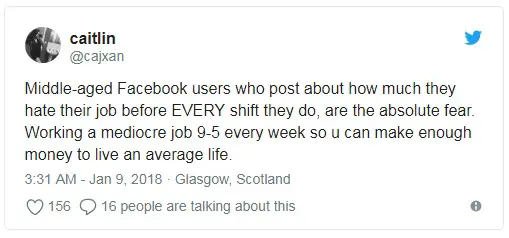
I've had multiple jobs that I hated, and others that I hated at times.
I'm sure you have too: The 2016 edition of The Conference Board's annual job satisfaction survey found that only 49.6% of Americans are happy in their jobs, and that's actually the best result since 2005.
Why struggle to find a job you'll struggle to keep?
While this first reason is pretty obvious, the second reason is a lot more subtle but no less painful.
2) Impact on future job searches
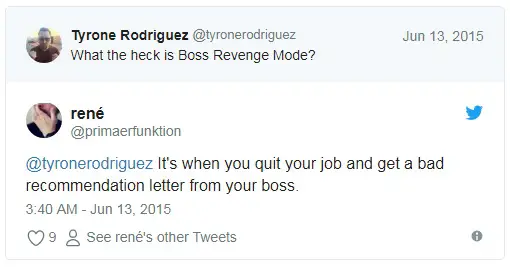
A job seeker contacted me with his biggest challenge.
He had good skills and years of experience, and was getting interview invites. However, he was getting tripped up at the same point in the recruitment process each time because his recommendations weren't impressing recruiters, so it was just one rejection after another.
This had gone on for 2 years.
After digging a little, we realized that it wasn't so much that his recommendations were poor, it was that relations with his most recent boss had been poor.
As a result, when recruiters contacted the former boss, they were underwhelmed and ultimately scared away. Unsurprisingly, they didn't go any further to reach the other, better references he'd provided from earlier managers.
His one recent, bad work experience was haunting him even after it was over.
There has to be a way you can avoid these situations in advance, and there is.
Free bonus: The One Job Interview Resource You’ll Ever Need is a handy reference to help you prepare for any kind of job interview. Download it free now
Have you ever heard of The Waiter Rule?
 This is what former Raytheon CEO Bill Swanson wrote for #32 of his Swanson's Unwritten Rules of Management:
“A person who is nice to you but rude to the waiter, or to others, is not a nice person. (This rule never fails).”
Many CEOs agree. Hardly surprising, because the Waiter Rule is:
- Simple to understand
- Easy to apply
- And it just works
How can the Waiter Rule be applied to companies?
Useful, honest information about an organization is harder to find than you'd think.
- Company websites are marketing tools and will usually limit themselves to highlights of a company's story.
- Similarly, private companies will sometimes be mentioned in the media when they put out press releases.
- Publicly-traded companies are required to divulge lots of information but it may only be comprehensible to financial professionals or economists.
Yet, you're more likely to face a small or medium-sized company or non-profit organization where even the above information may not be available.
To apply the Waiter Rule, you'll need to get in close contact with potential employers who appeal to you.
4 signs to help you weed out bad employers
1) A company that charges to read your job application
Whether direct fees such as application processing fees, or indirect fees such as requests for you to meet far from home, requiring you to pay your way, no company should be asking for your wallet. This is as backward as a casino that charges you to gamble, and is often illegal.
Speaking of what's illegal…
2) A company that asks illegal interview questions is probably acting illegally elsewhere too, out of ignorance or otherwise
In the USA, being asked your political affiliation is an attention-getter. In Israel, ethnic background has been an issue.
3) A company that requests free work during the hiring process will continue to do so after the hiring process
Years ago, before a first interview, an Israeli tech company once asked me to review their unfinished product. Regrettably, I wasted a few hours giving them free consulting advice when I should have immediately turned away… which I did after the first interview a few days later.
If a company won't pay for work during the application process because they aren't required to by law, there's a good chance they'll underpay when they are required to.
4) A company whose hiring process is unnecessarily complicated is a company for whom working will be unnecessarily complicated
Endless rounds of interviewing are often indicator of an employer who's afraid to take responsibility for their own decisions.
What about earlier signs?
The only drawback with the Waiter Rule technique is that it can only help you after you've already begun a meeting or job interview, and not earlier such as before you send in a job application.
However, there are signs you can look for before the application process gets that far, such as poorly written job listings.
One way to check if a company is good is by reading company reviews on Glassdoor.com.
In 5 Signs of a Bad Work Environment, career strategist Linda Raynier talks about looking for signs of a dysfunctional company, such as high turnover or companies that aren't in good shape financially:
More reading
Sometimes, only a deeper look will tell you what you need to know. If you follow the above guidelines, you can save yourself from job search headaches AND job headaches.
Question of the article
Looking back at the job you hated most, what could you have done to avoid it in the first place? Tell us in the comments.
Free BonusIf you want a handy job interview resource that you can keep on your smartphone or print out for easy reference, I’ve got a special bonus for you.
This free download contains:- 165 positive personality adjectives to describe yourself
- 444 of the most popular job interviewer questions to prepare yourself with
- 175 questions that you can ask in job interviews to make a good impression and learn about your future employer

JobMob Insiders can get this free bonus and other exclusive content in the JobMob Insider Bonuses area. Join now, it's free!
Subscribe to JobMob via RSS or email and follow me on Twitter for more ideas on avoiding bad workplaces and finding good ones.



I would also caution that there is an increasing trend, at least out here in SF bay area, for some ‘recruiters’ to dangle a sexed up position in front of you, get you to talking, and go to their offices.
Then you discover that they want a fee from YOU!. It is a scam. It is the first harbinger of a weakening economy.
My recommendation: Start all recruiter conversations by determining that the hiring company pays the fee. If you have made the mistake of actually going to the recruiter’s office, and then they reveal that they charge for the referal, you know that there is no job. Tell them no thanks.
Go down to their parking lot, find a local hardware store and buy a small length of steel pipe. Get a sandwich and wait for that sales rep to exit for lunch or at the end of the day. Finally, kneecap the sucker – they had ti coming.
Great wisdom there… and very good insight and practical advices… clear and to the point… the person/s who wrote this article know/s what is talking about and knows who to get the message through…
I do appreciate these ideas and advices very much..I do take them seriously and I will also make great use of them
Tanks
Ines
Jacob,
There’s a site in the U.K. in beta mode called The Career Mole which, as I understand it, is trying to give prospective job applicants a venue to get inside, front-line intelligence from current employees about what a company is really like BEFORE applying. The concept sounds promising.
Ines- glad you like the article.
Bilingual Blogger- Thanks for the tip, I found the Career Mole. Not the most appealing name but it does sound like a solid idea.
thanks for continuing the conversation!
i have to confess that i’m one of those people who is overjoyed when she finds a good waiter and gets a bit snooty when she finds an unco-operative waiter.
my daughter still drags up the time when i asked for tea to be made with boiling water (as opposed to just hot water). the waiter said, “i can’t boil water.” i said to her, “you can’t boil water???” and then proceded to expound to my daughter on the lack of intelligence of some customer service people for at least another 5 minutes.
so every time my daughter – one of my best teachers, as you can see – finds that arrogance gets the better of me, she says, “oh, you mean they can’t boil water?”
Great Post! Fantastic perspective. I
Isabella- that’s a great story, and the inside joke is the best part. But I think the main point of the rule is when you cross your conditions i.e. you’re snooty even with a good waiter.
Recruitnik- thanks
yeah, but thanks to my daughter, i’m working on being gracious with un-gracious waiters, too … 🙂
Unfortunately, this is so true !
there are also other “signs” of employers you will not want to work for:
1. an employer who asks what your payroll demands are (like they’re really going to pay what ever you ask for) this is a dirty ploy which will only get your name crossed off the applicants list. if you answer you are doomed. the best answer is that whatever is acceptable for this position for someone with your experience and credentials
by the way – any recruiter who starts a conversation with this question – forget it, there is no real job.
2. an employer who asks you what your salary was at your last place of employment – this is another dirty trick to try and get free info about what others are paying while if you answer you will never get more than what you say, even if the employer was initially willing to pay more and although it is a legitimate reason, never say that the pay was low as a reason for leaving.
3. employers that offer just above minimum wage salary and want it to be a global salary or make an issue about paying things they’re required to by law – havra’a or travel expenses…
perfect ,im from lebanon
Pingback: Jacob Share
Great advice. I especially like the waiter rule. I recently blogged about hiring professionals meeting with the receptionist to ask their opinion of a potential candidate after a job interview. It works both ways.
Barbara- Good insight and you’re absolutely right that there are waiter rules for candidates too.
Pingback: Jacob Share
Pingback: 41 Tips for Using Your Cell Phone to Find Jobs | JobMob
Pingback: Interviews – Know When to Fold ‘Em - CollegeRecruiter.com
I think the waiter rule is always a good way to judge character too. It really does never fail.
Pingback: Answering 13 Common Interview Questions | JobMob
I worked for a company in Bexleyheath da7 and it’s like working in a concentration camp . No rights for staff , bullying , low pay , sometimes no pay , making illegal deductions from pay without any notification , removing asbestos from the ceiling while staff are underneath , intimidation from directors , no contracts offered or anything just refused and told not to bother the directors or you will be sacked I could go on . Hse seem to live there and may as well open an office there as there are so many violations . Buy your own ppe , vans falling to pieces and not serviced , sometimes to dangerous to even drive them but are sent out anyway regardless .
Pingback: My Worst Interview - CareerAlley
Pingback: 9 Bad Job Listings Guaranteed To Leave You Rejected | JobMob
In Israel, you can scan the public knowledge area of the labor court cases for the name of a company to see what issues former employees had with them.
Many public sector related employers require submitting documents along with your cv, filing out an application form that most of the data on it is in rhe cv, submitting a hand-written page for a graphologist, undergoing a day long psycho analysis test at a recognized testing agency (pilat, adam miloh, etc)
Just did a massive rewrite of this article and embedded some supporting tweets and video 🤘🤘🤘
Pingback: 🎥 Top Useful Ways Job Seekers Are Using Video Today
Pingback: The Nightmare Interview: My Worst Job Experience - CareerAlley